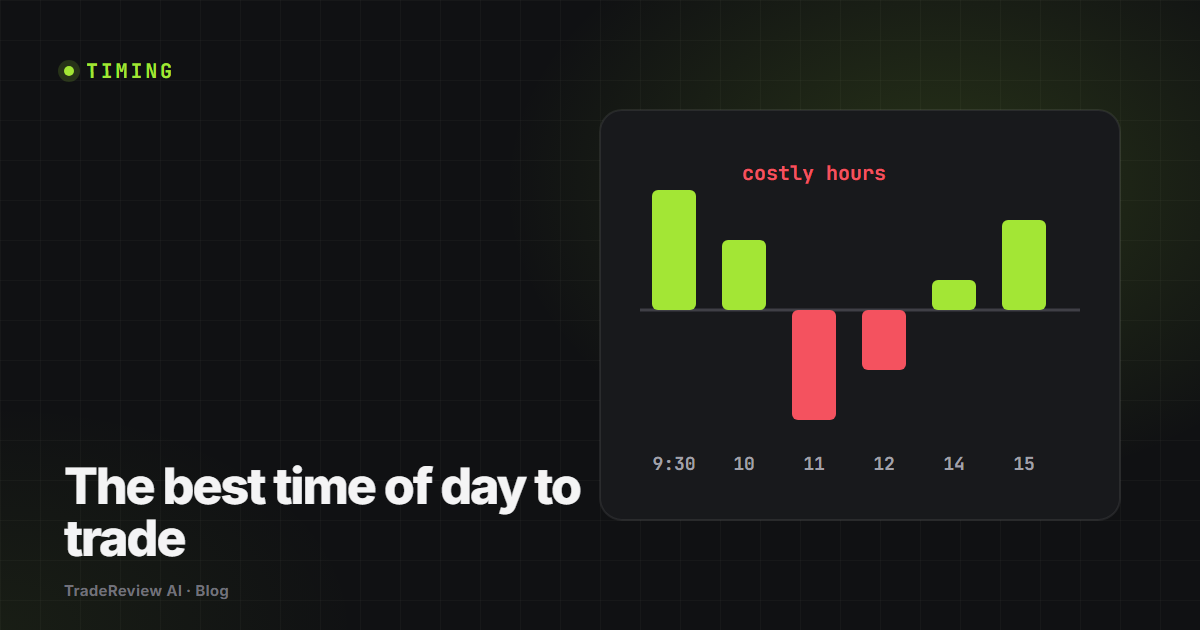
Markets have rhythms, but traders have rhythms too: focus fades, boredom creeps in, and discipline slips at predictable times. The hour-of-day breakdown is where those show up.
General patterns in US stock markets
- The open (9:30–10:30 ET): highest volume and fastest moves. More opportunity, but also wider spreads and more false starts.
- Midday (about 11:30–14:00 ET): volume usually drops. Moves are slower and choppier, which is where many breakout strategies struggle.
- The close (15:00–16:00 ET): volume picks up again as positions are adjusted before the end of the day.
Forex and crypto follow different clocks. Forex activity centres on the London and New York sessions, and crypto trades around the clock with quieter weekend periods.
Find your own best and worst hours
- Export at least 50 trades, ideally 100 or more, with entry times.
- Group trades by the hour you entered, in the market's time zone.
- For each hour, total the result in R and count the trades.
- Ignore hours with only a few trades. They are too small to judge.
- Look for an hour that is clearly negative while the others are fine.
What to do with the answer
If one hour is consistently negative, test a simple rule for two weeks: no new entries in that hour, or only your single best setup at half size. Then compare the results. Small changes to when you trade often do more than changing what you trade.
Journal prompts
- Which hour has my best total R?
- Which hour is negative, and how many trades are in it?
- Do my worst hours line up with being tired, bored or chasing?